X

Known as dark, smelly, smart – Indian

Risha Patel,
Marlborough, MA

To me these words mean what I think others think when they first see an Indian. Our oiled hair and spiced food is smelly and our dark tan skin is viewed as undesirable. Stereotypically we have to be smart, exceeding in math and science. We might have great ideas to share but our thick accent is a barrier to your ears. To be Indian, is to be many things. To me, it means the cultures, the languages, and the foods. It is all so beautiful, but am I not also American? I may not be white or smell like vanilla. I am so much more than someone with dark skin, with spices in my food, and supposedly smart.

Race is just a social construct that allows people to think they know who I am. A social box I was placed in by others when I was born. Now that I am older, it does not affect me who I am, but it is infuriating that governments allow violence and hatred to flow through because of race. Why aren’t the good characteristics able to outstand the bad? Why is being dark and smart dismissive? I do not smell bad. I am just a person that every American and every Indian is.

We are people, not your mascots.

Jacob K Tingle,
San Antonio, TX.

As the grandson of an Oklahoma Choctaw, I am deeply sensitive to the negative impact of stereotypes. Though no one looks at me and says, “He’s Native,” I try to use my multiple privileges to push back against the use of racists sport mascots and logos. We must understand that the systematic steps employed by the U.S. government to “Kill the Indian and save the man” continues to have broad reaching impacts. It is beyond time to #ChangeTheName.

Indian who was clueless about race

Charuta Apte,
Sammamish, WA.

I am an Indian, and teach in a under-served community in a school which is equally white, black and hispanic. In the beginning, it was a recipe for disaster. Now, it feels empowering. Just last week, I had a few student accuse me of going easy on a girl who they think is white but who is actually 75% hispanic, and I said “I’m not black, white or hispanic, so don’t bring race into this classroom”. When I said it, it felt like so many students breathed a sigh of relief. That really put a smile on my face.

Indian dad, European mom, identified Latina.

11-1Nisha Balaram,
Oakland, CA.

My dad would joke around, saying that my mom couldn’t help but fall in love with him when she first saw him. My mom was usually busy in the kitchen at the time, and would smile and roll her eyes in response to his comment; when the pungent scent of lentils and turmeric finally filled the house, jokes were put aside. Growing up, my mom occasionally laughed and said that if she had any more freckles on her arms, she’d be considered brown too. But I prefer the differences between my parents; they are not perfect, but they are a perfect combination. Growing up, our small family of four was geographically isolated from extended family members, with our relatives dispersed across the U.S. and India. During high school, I found a home in various Latino cultures, and was drawn to the many traditions and large family gatherings. Now reflecting back, I cherish the connection I had with being an “honorary Latina,” because it is within that culture that I found a sense of belonging. However, this same sense of belonging reminds me of my complex roots and the opportunity I have within my own family to connect myself with an intricate and beautiful network. After all, we are all human, and have so much to learn from each other.

I miss eating Vindaloo with Dad.

Wilhelmine Taylor,
Australia.

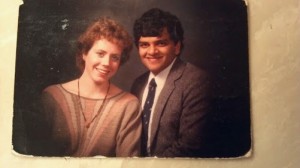
My father’s family was originally from India, but his mother was Scottish/Danish. People tended to assume he was a white guy with a deep tan, so when he and I went out for curry, the restaurant employees were surprised when he ordered vindaloo. One of my happiest memories of him was the time when, after Dad’s vindaloo had been brought out, all the restaurant staff came out and stood in the kitchen doorway and watched him eat as though he was defusing a bomb in front of them.

In many ways, my father’s family history is a generations-long tragedy. When Dad’s great-grandfather moved to Australia from India, he did so as the brown adopted son of an otherwise white, English family. His adoptive father appears to be the only member of the family who wanted him. Dad’s great-grandfather tried his hardest to fit in, and doing that meant leaving his culture behind and trying to become an English gentleman. Every generation after him was taught to blend in- to dress white, and act white, and to marry the whitest person they could find.

Dad married my blonde mother, but he also ate vindaloo, and he was the first member of his family in a hundred years to reconnect with Indian culture. He was proud of who he was and where his family was from, though for most of his life it wasn’t safe to talk about that in public. The racist undercurrent in Australia has a terrible impact, and even now the emphasis is still on assimilation and toning down cultural differences, when it should be on celebrating diversity in all its myriad forms.

But because Dad was the only member of his family to reconnect with his heritage, I can’t talk about that with his family. They’re all pretending to be white. So I’m here, telling a stranger that I miss my late father, who loved vindaloo.

Not Brown Enough to Be Indian

Pallavi Joy,
Philadelphia, PA

Growing up in a 97% white school system, and being raised by one Indian immigrant parent and one Indian American parent really affected the way I saw myself and my race. I was always too brown in school to fit in with all the white kids, but in Indian circles I was too American. Not fully fitting in with my American culture or Indian culture is a defining feature of my life whether or not I want it to be. I am still learning how to love my dual cultures.

My Ancestors Bones Not For Museum

remains-of-chero-nottowaySonya Williams,
Baltimore, MD.

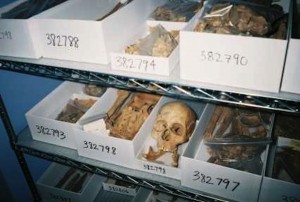
I grew up in a unique area of North Carolina in what is referred to as a ti-racial community. My Indian family are the Cheroenhaka Nottoway and Meherrin Indians of Southeast, VA & North Eastern, NC. When I went to college, during a lecture in my anthropology class, the professor was discussing a dig that took place on the Nottoway River and how 193 bodies were removed and placed in the Smithsonian collection. After the class, I approached the professor and told her I was a member of this tribe, but had never heard about this. This was in 1985 and that knowledge has haunted me every since. I contacted the museum on many occasions and was told by staff that “the Smithsonian does not house human remains.”

I new this wasn’t true, but I had no legal way to get to the information. This went on until President Clinton enacted the, Native American Graves Protection and Repatriation Act, which forced institutions to return all Native American artifacts and burial remains. After this, the museum did in fact admit to having the bones; however, they will not turn them over to the tribe because the act only covered federally recognized tribes, not state recognized. Therefore, we still wait for our ancestors to be returned to their eternal rest which is promised to all by God, but is being denied to my people. I am currently writing a book to bring attention to this injustice. Not to promote hate of any race, but in hopes that everyone black, white, red, or yellow, can agree that no human remains should be held in museum cases.

Thank you for doing this project. I have so enjoyed the stories. It was hard for me to pick just 6 words. I have many 6 word stories I can tell; being of a multi-race background.

Indian who was clueless about race

Charuta Apte,
Sammamish, WA.

I am an Indian, and teach in a under-served community in a school which is equally white, black and hispanic. In the beginning, it was a recipe for disaster. Now, it feels empowering. Just last week, I had a few student accuse me of going easy on a girl who they think is white but who is actually 75% hispanic, and I said “I’m not black, white or hispanic, so don’t bring race into this classroom”. When I said it, it felt like so many students breathed a sigh of relief. That really put a smile on my face.

Join the Newsletter

Subscription to our newsletter open soon.

Indulge in timeless elegance with our hand-curated collection of luxury vintage men’s fashion. From classic suits to iconic accessories, our online store offers a premium shopping experience for the modern gentleman who appreciates quality and style. Shop now and elevate your wardrobe with our carefully selected pieces that celebrate the art of craftsmanship and heritage fashion.