X

2042 can not come fast enough.

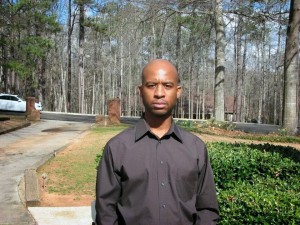
NHJ-at-overpriced-Turkish-Coffee-hotel-in-Diyarbakir-TurkeyNathan Henderson-James,
Oakland, CA.

6 words is obviously limiting. However, my 6 reflect my own experience growing up as one of the few white kids in my local public schools. It was an education being constantly in the minority (in school, outside of those walls, I was comfortably back in a white affluent world) and one that more people with white skin privilege need to go through. It breed empathy, understanding, and a full 360 degree view of people from outside your own background. You get the good, the bad, and the ugly. It made me better at dealing with difference and better at interrogating my own prejudices, internalized racism, and privilege. It wasn’t sufficient to make me struggle for racial justice, but it was, for me, a necessary component for striding that path. And that’s why I picked my 6 words. Because people with white skin privilege need to experience being the only one more often. It won’t be sufficient to build the political will to change the institutional racism in our various national systems and culture, but it is necessary to help build the shared experience necessary to have an honest conversation about getting there.

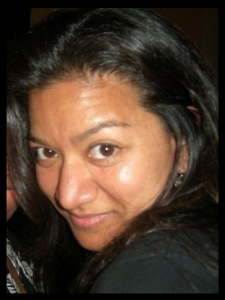
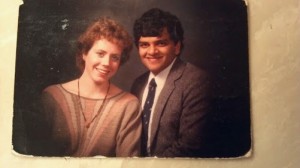
Indian dad, European mom, identified Latina.

11-1Nisha Balaram,
Oakland, CA.

My dad would joke around, saying that my mom couldn’t help but fall in love with him when she first saw him. My mom was usually busy in the kitchen at the time, and would smile and roll her eyes in response to his comment; when the pungent scent of lentils and turmeric finally filled the house, jokes were put aside. Growing up, my mom occasionally laughed and said that if she had any more freckles on her arms, she’d be considered brown too. But I prefer the differences between my parents; they are not perfect, but they are a perfect combination. Growing up, our small family of four was geographically isolated from extended family members, with our relatives dispersed across the U.S. and India. During high school, I found a home in various Latino cultures, and was drawn to the many traditions and large family gatherings. Now reflecting back, I cherish the connection I had with being an “honorary Latina,” because it is within that culture that I found a sense of belonging. However, this same sense of belonging reminds me of my complex roots and the opportunity I have within my own family to connect myself with an intricate and beautiful network. After all, we are all human, and have so much to learn from each other.

I ask again, am I racist?

Karla Torres,
Oakland, CA

Am I racist?

This is something I’ve been asking myself recently as I’ve encountered new neighbors living on my street. This neighborhood has always been predominantly black and Latino and while there have been issues between the neighbors, things have never gotten to this level of uncomfortableness. All the homes here have been inhabited by the same long term tenants but now people just buy homes and rent them out to anyone for easy money. I’ve lost my sense of safety and I am angry that I no longer feel safe in my home. That I can no longer walk out of my house without feeling like someone is watching me.

These neighbors embody all the stereotypes you see of black people in the media. They engage in illegal activities that while not rare in Oakland are rare for this small community. They play loud music after hours. They fight with each other. And when neighbors approach them to talk about their concerns, they immediately turn combative and want to turn everything into an altercation. So how do I approach them?

How do I tell them when I have issues? I’m scared and my fear is making me lose empathy for the plight of black residents in Oakland. I’ve always debated people on the issue of gentrification because I’ve always felt that it is unfair for black and Latinos to be pushed out just when the city is revitalizing but now I feel like gentrification can’t happen fast enough so that I can feel safe once again. They trash the neighborhood with condom and swisher wrappers.

Of course I know that they do not represent all black people since I’ve met many in college and in my personal life that have other goals and aspirations. However my fear is overtaking me and it’s pushing those few who meet these stereotypes to the forefront. Now when I think of black people I think of my new neighbors. I find myself wishing for stronger policing to deter crime because that’s a faster solution than using education or the redistribution of wealth. I felt bad for black youth who ended up incarcerated but now I ask myself if they maybe led lives that drove them to that end. How much can we blame on institutional racism? How much can be attributed to the individual’s own choices? Are we too quick to blame institutional racism? It’s not right but that’s how I’ve been feeling lately. And I wonder what’s the solution? What can we do as a society? I know poverty is a never ending cycle but even poor people have manners and education. I am by no means privileged. I also come from a disadvantaged community but for me criminality was not the solution. But I will acknowledge my privilege in that I was raised by both of my parents who were hard-working and provided for me. This house was what they bought with their savings. Now I don’t feel safe in my parents home where I pay the mortgage. I don’t want to feel like this because I have two nephews who are half black and I don’t want someone to judge them before meeting them. I don’t want someone to be scared of them when they seem them and yet I am doing the same. What can I do? How can I approach them? How can I hold on to the last shreds of empathy I feel towards the plight of the black community in Oakland?

So I ask again, am I racist?

No Irish, No Blacks, No Dogs

no-dogs-no-blacks-no-irish-signBenjamin Christy,
Laguna Niguel, CA.

This is the title of John Lydon’s autobiography, which refers to his upbringing as an Irishman in London. He was reminded of how the Irish were despised and how there used to be signs in apartment buildings and hotels that expressed their displeasure with these three races. I used to have conversations with my grandfather about race, and he confirmed that, yes, the Irish were seen as less-than-human in their early days of assimilation in America. As a young man of Irish descent born and raised in Oakland, CA, I have felt everything from being ostracized, ridiculed, and physically abused, to taking full advantage of the invisible shield that is “white privilege.” I wouldn’t trade it, however, because this made me open my eyes to a world that likes to hide behind its subconscious hate and ignorance. By speaking on what has happened, we can educate others so that we are empowered with more information and intellect.

I will never really ‘get it’.

Me_and_Coreen (1)Celia Beasley,
Seattle, WA.

Being an upper-middle class white woman, I know I will never truly understand what it feels like to be a person of color in America. Despite my attempts to be aware of racism in this county through conversations, news stories, interviews, books, this website, etc, I know that I will never ‘get ‘ what it feels like to experience racism every single day of my life. Until I have been followed around in stores, pulled over by the cops for no reason, seen people clutching their belongings when I walk by, had people comment on how smart I sound for who I am, or fear for my son’s very life because of his skin color – I will never truly understand the cost of being a person of color in America. And by ‘cost’ I mean what it takes away from us – both as individuals and as a society.

I grew up in Oakland, California, in the only white family in an all-Black neighborhood. I lived in Madagascar for 2 years. But even those experiences of being a minority were nothing compared to the stress from racism that a person of color experiences every single day in America.

I know I am only responsible for my own actions, and for a short time, those of my young children. I can’t justify, explain or take responsibility for what other people say or how they act. I don’t know if there is anything I can do to change racism in America. I am fully aware of my White privilege, not only because of race but also because of class, and that I am very, very lucky. And I make sure my kids know that, too.

The picture above is of me, age 7, with my beloved neighbor growing up.

“Good Morning!” But there’s no response.

Clyde Jasper
Oakland, CA

I’m a tall black man with dreadlocks. I’m a husband and a father. I’m a property owner, and a taxpayer. I’m a veteran. I vote. I graduated Phi Beta Kappa from a world class university in Berkeley, CA. In passing, I many times acknowledge a white persons presence and humanity with a “Good Morning” and they look at me but don’t respond.

Black-white man; white black man

OLYMPUS DIGITAL CAMERAKirl T. Lawson,
Oakland, CA.

I have so many tales to share about my experience with my color (or lack of “definitive color recognition”). growing up in Chicago, I was called “a white n*****” by friends at times w/ affection and at times derisively. Initially the appellation hurt my feelings until I took an objective look at myself in the mirror. Years later and moving to San Francisco and working at city hall, a female constituent asking for me but not remembering my name, described me as “he is either a “black white-man” or a “white black-man”. Hearing that relayed, those phases resonated with me in their succinctness. These are the ways that people view/see me. it’s been a blessing and a curse as either can create discomfit for the viewer and then extent to me. Black folk ask me “what ‘is” you” seeking racial confirmation. I tell them “you know what I is” you just want me to verify/affirm it

Lizzie’s Journey from Plantation to Farm

2014-02-06-13.24.20 (1)Michelle Hill,
Oakland, CA.

Our family is so fortunate that my great, great, great grandparents were not separated from each other and their children during slavery. Because the family stayed together, we have a family Bible, pictures and records that document their lives in this country. My great grandmother, Mama Lizzie, was born in 1870 to a slave girl who was raped by her former master. Slavery had ended, but the freed slaves were still living on the plantation because they had nowhere to go. Mama Lizzie’s life spanned 94 years from the end of slavery to the mid-20th century; from a family of slaves to a family of land owners. She and my cousin Mary shared a room for 18 years in the family’s farmhouse. Mama Lizzie passed the family stories on to my cousin. Cousin Mary wrote Lizzie’s Story: A Slave Family’s Journey to Freedom to document the challenges, persistence, perseverance, ingenuity and strength of our ancestors. As African-Americans, we have been given a rare gift to know our family genealogy and heritage as far back as 1850. http://www.amazon.com/Lizzies-Story-Familys-Journey-Freedom/dp/0759699208

Guessing my race isn’t a game

Sheila Islam,
Oakland, CA.

You do not win a prize if you get it right.

People hardly ever guess it right and thats not exactly the problem. The problem is, that when people do this, I feel objectified. I feel like my physical appearance is being ripped from me and being judged. I am so many other things besides my race. Don’t get me wrong. I love who I am and where my family is from, but that does not completely define me. I strongly identify with my racial make up mostly because people make me do that; because I receive different treatment because of my skin color and this different treatment makes me identify with it more strongly.

I just have a huge problem with race. If I say where my family is from people expect me to be an expert on those countries, countries I have either never been to or have spent random summer vacations at during my childhood. People then get disappointed in me if I am not an expert in all things Bangladeshi or Mexican. There is no winning. I just constantly feel othered. I feel like society is constantly pointing at me and asking “why?” I am exhausted of having to answer people’s questions. It is insulting. I was born in the United States. I am a U.S. citizen. I am a person. Let me exist without your obnoxious, seemingly innocent questions that make me feel like i’m less of person.

Wow, you speak English really well!

Screen-shot-2013-05-16-at-9.30.32-PMSharmila Guha,
Oakland, CA.

It was my first summer job after high school. A man in the lunch room one day tried to ask shy me this odd questions… which just left me stunned. I was born and raised in Los Angeles; why wouldn’t I speak English well? I guess the “dad from India and mom from Philippines” thing really confuses people.

I’ll experience this, hopefully they don’t.

FullSizeRenderTakiyah L.,
Oakland, CA.

If all it takes for me is to take on the burdens of intersectionality, just so my brother and sister, and future generations of Black and Brown youth will not have to experience that, then I am all down for the cause. I would not want them to endure such things, I would not want this for anybody actually. Though, the trials and the tribulation are what adds a profound uniqueness to each culture of color. I feel like as society, we came a long way, however, we have an even longer way to go. I believe with time and effort, we will eventually get to that point where race is not an issue, but until then, we keep fighting. #BlackLivesMatter.

Love my DST HowardU Blackity Blackness

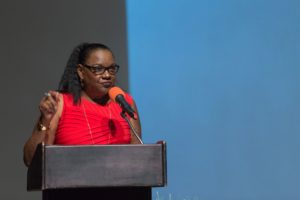
Regina Stroud,
Oakland, CA

The words of Ijeoma Oluo resonate with me when she says, when you have a nation that was founded upon the genocide of a race of people and built with the chattel enslavement of another, it will always be about race as long as this nation exists. That is why I love my Went-to-Howard-DST-Blackity-Black-Self. That part…right there.

Join the Newsletter

Subscription to our newsletter open soon.

Indulge in timeless elegance with our hand-curated collection of luxury vintage men’s fashion. From classic suits to iconic accessories, our online store offers a premium shopping experience for the modern gentleman who appreciates quality and style. Shop now and elevate your wardrobe with our carefully selected pieces that celebrate the art of craftsmanship and heritage fashion.