X

I don’t get followed in stores

Jim Stauffer,
Canada

An Indigenous adult student in my class once remarked, “I’m so tired of being followed around in stores.” My co-worker who is Indigenous also has the same experience. Unearned white privilege creates an automatic assumption on the part of floor walkers that I am in their store on legitimate shopping business. My adolescent shoplifting never enters their story about me, whereas their story about my Indigenous friends is built on prejudgments based on lies they inherited as surely as I inherited privilege.

Left Crying in the Bathroom Floor

Charlie,
USA.

I brought my car in for an oil change (in the predominantly black area I live in) and they told me that it’d be an hour before they could get to it. ‘No big deal,’ I though, ‘There’s a shopping center across the street.’ As I made my way down the sidewalk, a man cat-called as he drove past. I didn’t think much of it as I crossed the street and headed towards Big Lots. However, he had turned around and was now pulling into the parking lot.

“Hey,” He said, getting out of his vehicle. “I don’t wanna come on too strong, but you’re really beautiful.” At this point, I was flattered. I had recently had my daughter, and was feeling uncomfortable in my own skin due to the weight gain.
“Thanks for saying so, but I’m married,” I replied.

“He’s a lucky man. Are you happy?” He asked, following me up the parking lot. His remarks began to get invasive and personal, making me extremely uncomfortable. I gave him a more stern ‘No’, and he had seemingly gotten the message. He hung back and didn’t follow me as I walked into the store.

Less than five minutes after I entered the store, he came in. I told myself that I was being paranoid, that he was probably planning to come in regardless. Not really wanting to face him again, I made my way to the back aisles and tried to focus on shopping. He soon found his way to the opposite end of my aisle, basket empty. I tried to pretend that I hadn’t seen him, and went to the furniture section. Yet again, he had somehow ended up within 10 feet of me. Even though it could have still been an uncomfortable coincidence, I decided to just purchase the phone charger in my basket and head to a different store. As I was handing the cashier my card, he came up to the register next to mine, only a pack of gum in his hand.

There was a grocery store attached to the Big Lots, so I made a bee-line for it. He entered the store soon after I did, and I was beginning to have a hard time believing he wasn’t following me. Despite my obvious attempts to lose him, he managed to be in or near every aisle I was in. I was beginning to get frightened, so I went to the women’s bathroom at the front of the store. A female employee saw the look on my face and asked worriedly, “What’s wrong?” I explained the situation to her and she asked for his description so they could call the police.
The moment I mentioned his skin color, her eyes dulled. Suddenly, her responses to me were short and a bit annoyed, as if I was wasting her time. She told me to wait and she would see about getting her manager, so I did. I sat in that bathroom for thirty minutes before I realized that no one was coming. From a different perspective, I understand that I might have looked like a racist white woman (who is in reality half Mexican) wanting to cry wolf about a POC harassing me. At that moment though, I didn’t care how I looked. I sat in the floor and cried, terrified of the possibility that the man was still in the store. Sad that the employee (who was also black) saw me as a racist, not a frightened woman who genuinely needed her help. Angry with her for leaving me alone while he might have still been out there.
Thankfully, the store manager (who was also black) happened to walk in on my sobbing. After explaining to her what happened, she informed me that no one had mentioned the incident to her at all. She called the police herself and sat with me at the café area until they had arrived. Luckily, he left, but the manager didn’t leave my side until the police officer confirmed it. As mortified as I was at the situation and the employee’s inaction, I’m forever grateful to the manager who saw the problem and not my race, and helped resolve the situation.

The plantation haunts my gay marriage.

Erik Shawn Frampton,
Charlotte, NC.

I am the descendant of a line of plantation owners in South Carolina. As a gay man, my upcoming marriage will finally occur on our 20th anniversary together. My larger southern family struggles to see my identity as sacred, just as they struggle still to see minority life as sacred. But what progress. From chains to wedding bells with a gay Asian man.

Born Norwegian, Raised American, not illegal

Linda Kristensen,
Grand Rapids, MI.

I am writing this for my daughter who is 34 with Autism. She became my daughter in 1980 when I was living in Norway. We returned to the USA in 1983 but my daughter even after 30 years is still not an American citizen. Here’s part of her story….

My oldest daughter, Maigunn was born on January 10, 1979 in Hammerfest, Norway (the northern-most city in the world). When Maigunn was 5 months old, she was sent to an orphanage across the county in a town called Vadso near the Russian border. There she remained until my now ex-husband and I received her at 23 months as a foster child. We were told that she was stiff like a doll and may be mentally retarded but the staff also thought it might be just the orphanage environment. Norway like most “Western” cultures believes that children should be raised in a home and not an institution. Most of the orphanages in Norway have only severe mentally impaired children with very strange behaviors. The staff felt that if Maigunn were part of a family that maybe she would be normal once she wasn’t exposed to these behaviors. When the woman in charge of adoption in northern Norway called and requested that we come to Vadso and see Maigunn; I was visiting my family in the USA; not having been back for 3 years. So my ex-husband went alone to see this little girl. When he arrived, he immediately fell for this little toddler, called me and it was agreed that we would take her. She would be our “long-term” foster daughter, just like an adoption. (This has come back to haunt us even today.)

So my mother and I began buying clothes, shoes, toys and other toddler supplies. I sent several boxes to Norway, prior to my return and remember that my ex-husband was in tears upon opening them.

My first impression of Maigunn when they brought her for a visit was that she was blind. She looked straight ahead with no eye contact. The other thing I noticed was that she loved spinning objects. (These are two of the classic signs of Autism) At the time if someone had said, “Do you think she has Autism?” I would have responded with “What’s that?” Even as a physical therapist, I had no exposure to this disability and very little was known and there were very few treatment options.
Maigunn at 2 years had no language, had just begun to walk so she had that abducted or teetering gait that is so typical in babies just starting out on their own feet. So the first task was to get language. I don’t know why but it seemed natural and was an international word so we started with, “Baby”. Phonetically and developmentally, I think “B” is an easier consonant to say than many other consonants. Well it took 9 months where she studied our mouths and felt our lips with such intensity that you’d have thought she was discovering the contents of the Rosetta stone. I remember one morning waking up to Maigunn’s chatter of saying and half singing “Hakke” which is Norwegian for chin. It must have stimulated me for after that I began singing songs to Maigunn with the word “Baby” in them; everything from “Rock-a-bye Baby to “I love you and don’t you forget it, Baby”.
As a physical therapist, I knew that we only had a limited amount of time to catch up. When she was almost 3 years old, she was evaluated at Mary Free Bed Rehabilitation Center. At that time, she was 1 ½ years behind and the gap would only increase if she couldn’t make significant gains in a short time.
The summer of 1982 was a turning point in our lives. My mother was very sick in the hospital with hepatitis, and Norway had no services for Maigunn until age 7; so we decided to return to the USA. Even then it took another 2 years until she was diagnosed with Autism and placed in special education through the public school system.

The negatives have been numerous.
Like the first pediatrician we encountered in the U.S. who upon doing a preschool check-up, found that Maigunn was in the 75 percentile for height and weight and told us that we should consider institutionalization since she was bigger than most kids her own age and therefore could be dangerous to the other children.
Like the time at a playground when a mother hit Maigunn for choking her child in the same manner her daughter had just done to Maigunn. Unfortunately Maigunn thought the other child was playing a game with her and didn’t understand that the little girl was being mean to her.
Like the children who chased Maigunn on the way to her school bus stop, so that she ran out into the street, almost got hit by a car and lost her new pair of glasses. And when I tried to get the school to change the bus stop just three blocks down the street, they refused.
Like the neighbor children at the end of the block who chased and teased Maigunn every time she road her bike past their house until she got wise and began taking an alternative route which of course was on a busy street.
Like the teacher who misplaced Maigunn’s lunch money envelope on her messy desk and blamed Maigunn for being forgetful (the underlying idea was that she was handicapped and therefore couldn’t remember her lunch money). Only later to find out that the lunch money was on her desk after all. However the Principal did call and ask if Maigunn wanted a formal apology. Of course she didn’t since Maigunn just doesn’t hold grudges.
Like at the Middle School Formal Dance where a bunch of students egged one of their group to ask Maigunn for a dance. He then made faces behind her back the whole time, while I stood by watching, debating whether or not to step in and deciding that these things are going to happen. But once again thanking god for Autism since she never realized that they were mocking her.
Like spending time and money to have Maigunn trained to take the city bus only for the bus system to change the bus route numbers the following year so she ended up taking bus # 5 which instead of going to our neighborhood, now went to the airport. So rather than getting home at 4:30, we got a call at 6:30 that the bus driver left her at a gas station 3 miles from our home. (Of course from 4:30 until 6:30, I had been driving around frantically looking for her.)
Like the time a boy made sexual advances towards her after she was done with a running workout at a high school track. But again she was saved by her ability to run away and fast.
Like the neurologist who sees her briefly, diagnoses her with schizophrenia and negates all the current literature and research on Autism even though as a parent, I have done more reading and researching on the topic than he’ll ever do in his lifetime. But still unwilling to listen to me.

But there have been positives
When I went to the first school Christmas pageant that Maigunn was in and watched as the children marched in line onto the stage. Then it was Maigunn’s turn to go on stage with the other students. She stopped at the entrance, stared out in to the audience and didn’t move until the student before her came back, took her by the hand and led her to her place. When they sang she stepped forward and sang with her whole heart. At the end of the performance she mimicked the audience and clapped her hands along with them. Friends who knew Maigunn and me looked my way and smiled. It was one of those priceless moments that I wouldn’t have missed for the world.
When the Brownie and Girl Scout leader, Sharon, had no qualms about including Maigunn in their troop and treated Maigunn like one of the girls. And Maigunn wanting to be just like the other girls was the first one to approach the principal and sell a box of cookies.
When her piano teacher, Maxine, was not a stickler for learning how to read the notes but let her enjoy the beauty of playing the music. Maigunn plays the piano by ear.
When my daughter says; “Mom you need a hug” when she really means, “I need a hug.” And realizing that we conquered the sense of Touch, which is extremely difficult for people with Autism.
When she succeeded not only in being on the High School Cross-Country and Track teams. But by being able to participate as a regular student in a regular Ed sport and achieving MVP (Most-Valuable Player) Junior and Senior years for Track and received “All-City” for Cross-Country her Senior year. She accomplished what most kids with Autism rarely get: the acceptance and respect of regular Ed students as one of them.
When one of the girls who, along with her friends, mocked Maigunn behind her back at the Middle School dance, now admired her in High School for her running ability since she could never run as fast as Maigunn even though she was not handicapped.
When at a track meet, a parent from another high school came up to me and told me that my daughter was an inspiration to their team. We had talked a year or two before about my daughter and her handicapped condition and he and his team had watched her develop over the years and used her as role model for their team.
When I know that living and raising Maigunn has made me grow both personally and professionally. I’ve become a more realistic therapist and now have more empathy with my patients and their families.
When I remember the wisdom, Maigunn has expressed. Like the time I asked her during her freshman year in high school if she wished that she didn’t have Autism and she replied that she thought it was part of her. Later in her junior year her response was that she wished that she wasn’t Autistic. And now she tells me that she has to get use to this Autism.

Then there are the challenges.
Such as the years of being on the Parent Advisory Committee for Special Education in the Public Schools then on the board for the local Autism Society and finally on the state Autism board.
Such as my many job changes to accommodate my children’s needs
Such as the numerous letters of thanks and concern sent out to try to get better understanding by the public and the politicians.
Such as the loss of a marriage
Such as the hours of running with my daughter so that she would be familiar with the cross-country running courses
Such as the hours of job coaching so that she wouldn’t loose her job while she was going through a rough time.
Such as taking the chance in signing up Maigunn with the G.R. Jaycees and watching her be able to be part of a group where she is not ridiculed for being handicapped.
Such as attempting to set up private housing for my daughter so that she is in a safe and secure environment before I die. Only to find that many parents of handicapped older children do not want to talk about it. And that they are content with letting the state take over when they die and not realizing how devastating their death and change in housing will be on their adult child.
Such as the wish that we as a society would be more handicap accepting. Knowing that most of my friends would not want their sons to date my daughter. And many of my friends would not consider living in a house with a ramp even if it were aesthetically pleasing.
And thanking God for good professionals who have an uplifting approach to disability and see that they have rare talents that the rest of us do not.

And finally, the Reward
When my daughter says: “Mom, you’re the best mom this girl ever had.”

I’m American Indian-I’m a Unicorn.

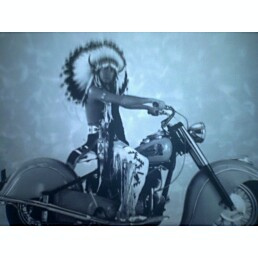
eagle-motorcycleTy NolN,
Tempe, AZ.

I’m from a traditional family and have braids. I dance at Powwows, and participate in our Longhouse Ceremonies. The photograph is from when I used to do modeling and is from a calendar photo shoot, on Motorcycles. I’m on a 1935 Indian motorcycle, because one of the “gimmicks” of the calendar was “an Indian on an Indian.” I used the term “Unicorn,” because with Unicorns and American Indians, for so many Americans (and I find the same thing when I’ve traveled internationally)–everyone knows what they think Unicorns and American Indians look like, but they don’t believe we actually exist. I feel in the perception of a lot of non-Native people, particularly if they don’t live near a reservation, we are a fantasy, and exist in a vaguely historical way, but not as part of their contemporary reality. For many Native Americans, if we don’t have braids, or don’t dress in a more traditional manner, we’re usually perceived as another ethnic group–in my case Asian or Filipino. Whenever I’m in Hawaii, I’m even assumed by the locals to be Chinese-Hawaiian, and because I have long hair, I’m also thought to be a Native Hawaiian Rights Activist. One of my oddest experience was going to Florida to attend college, where the racism I encountered was directed to me not as an American Indian, but for being thought Japanese. Later, when I was in graduate school, one of my professors was Japanese-American who was very upset and shared with the class that over the weekend he had gone clam-digging on the Oregon coast, so he was very casually dressed. He stopped to eat at a restaurant and it became obvious the staff was ignoring him. He finally said in a loud voice, “I’m not leaving until I’m served.” A waitress came over and said, “We don’t serve Indians here.” When he said that, those of us who were Native, laughed–no Asian-American students in the class did.

Once, I was in Germany, and waiting in line to check into my return flight home, when a very official looking employee came up to me and asked, in German “Do you speak English?” I replied, “Fluently.” She asked for my help, and explained they had a traveler they were having problems with in communicating, since he didn’t speak German, and asked if I would be willing to help. They took me over to an elderly Japanese gentleman. I told them the only help I could offer was to order him food at a Japanese restaurant, but I wasn’t Japanese.

It’s a very odd experience to spend a great deal of my life as either being seen as not exactly “real,” or as something I’m not–I often wonder how often people actually see “me.” One morning I was in downtown L.A., waiting in front of my hotel to be picked up by someone from the L.A. Unified School District, where I was consulting. People kept coming up and asking if I were in a movie.

When I was young, an elder came to me and said, “The minute you step off the reservation, you have to think of yourself as an ambassador. When you leave the reservation, White people won’t look at you and think, “There’s (and she used my Indian name). Instead, they will look at you and think, “There’s an Indian.” And it won’t matter how much education or how well-dressed you are. They will look and you and what you do, and they will think, “That’s what an Indian does.” Over the years I’ve so often thought of her words, and how much of a burden it is I share with a lot of other non-Whites. We belong to a “collective,” and are seen and viewed as representative of that Collective. Part of White privilege is being raised to always think of oneself as an “individual,” and then getting upset to discover a lot of people will see Whites as part of a Collective as well, and that Collective doesn’t always have a positive image. I now live in Arizona. When I first moved here, I was surprised to have White strangers come up me at the bus stop or in stores, and ask if I spoke English. At the height of the anti-immigration sentiment here, many of us who are American Indians were very concerned, because when it comes to racial profiling (and the Sheriff of the county where I live has been found by a Federal investigation as guilty of racial profiling–we know most law enforcement officers probably won’t be able to tell the difference between American Indians and people they perceive as “illegal aliens.”

Will they ask me or assume?

image (5)Hillary Buren,
Kansas City, MO.

As a biracial women growing up in am almost entirely white community I have adapted to addressing my racial ambiguity (I am most commonly mistaken as Hispanic but even have been confused for as Indian) and usually I resort to humor when it comes to this topic. However it never ceases to amaze me how uncomfortable it is for people when they cannot classify me right away. I run into 2 types of people those who just ask and those who assume…on the rarer occasion I met those who allow me to bring it up in conversation… and those are the people who earn my trust the quickest.

The nun made me mark “white.”

Jackie Loya-Torres
Kansas City, MO

As a small child in the 1970s, I remember having to take some sort of standardized test in school. You know…the ones where you need a #2 pencil to fill in the ovals? On the cover page, in addition to listing my name, gender and age, I was asked to mark my race. As I recall, my options were something like White (or maybe it said “Caucasian”), Negro, Asian/Pacific Islander and American Indian. I remember feeling panicked that my race was not an option. Which oval should I mark? Aren’t I going to be graded on this? My classmates had already flipped the page and were swiftly marking their ovals. I approached Sr.’s desk and informed her that I didn’t know which oval was mine. She looked at me as if I had two heads. She told me to mark “white.” I looked back at her as if she had three heads under that habit. White? How can that be, I wondered. I thought, maybe American Indian or possibly Negro. These didn’t work either, but they at least felt in the ballpark. I tried to explain to Sr. that I wasn’t white and that surely, there must be another form for me to use. Annoyed, she again told me to mark “White.” So, like the good Catholic schoolgirl that I was, I followed her instruction and reluctantly marked white. I went on to fill in all my ovals and as I recall, scored well on that standardized test.

Almost 40 years later, this experience still resonates with me. The forms still don’t work for me. I am well aware that being Latina (in my case, Mexican-American) does not qualify as my race, but as my ethnicity. I know the forms and the Census Bureau want me to mark that I’m a white Latina, but that doesn’t work for me either. My skin is not white. I have never been afforded the privileges of being white and I do not identify as white. I am brown. In my mind and in my experience, my race is brown, Mexican-American, Chicana, Latina and maybe, just maybe, even Hispanic (another word I’m not crazy about), but not white. After all these years, I’m still searching for my oval.

You are holding the binoculars backwards.

Andrew Schlager,
Kansas City, MO.

“You are holding the binoculars backwards.” We are so consumed by generalized assumptions about race that we fail to see that every individual is different. We see people from afar, just as a person would see looking through binoculars backwards, and make judgments without really looking closely, like a person would see using binoculars correctly. When it all comes down to it, every single person is different and has their own story.

Growing up in America as “other.”

Marie K. Shanahan,
Submitted via Twitter: ‏@mariekshan.
When you’re not quite minority enough.

In 1997 at age 25, I came to terms with my place and my (mixed) race in America. I wrote a personal essay about it for The Hartford Courant: “Mixed Races, Mixed Messages: What Happens When You’re Asked To Choose Between Two Cultures”

By MARIE K. SHANAHAN; Courant Staff Writer
Friday, March 28, 1997 | Column: Excerpts

My older brother sometimes likes to refer to the children in our family as “bananas.” Not because we’re crazy. He says it to poke fun of our heritage.

Our mom is from the Philippines; dad is a native Vermonter. So like a banana, he says we’re yellow on the outside and white on the inside.

My whole life I’ve been asked the same question by curious people who see my straight black hair and seemingly Asian eyes and then are puzzled by my Irish last name.

“What are you?”

Sure, there are words to describe me and the many other children who are products of interracial marriages: mestizos, mulattos, hybrids, half-breeds — oh, and my personal favorite, mutts.

As we racially mixed children move into adulthood, we’re faced with the unique difficulty of trying to succeed in a country that categorizes human beings like paint swatches.

But what happens when you’re not a TRUE color? When you’re not black or white or yellow or red but some strange shade in between?

For example, on surveys with an ethnicity question, which box do we check? Other? Where are we counted? Who are we supposed to be?

These questions never became more real to me than three years ago during an interview for a minority job-training program.

An eager, anxious 21-year-old, I was up against 28 other “minority” applicants competing for just a few job spots.

My interview seemed to be going smoothly until one interviewer asked:

“From what I gather from you, Marie, you seem to lean more toward being Filipino than you do toward your other culture. Why is that?”

The question floored me. What did that have to do with my talent as a writer or my intelligence or my ability to be a good journalist?

I never thought I leaned toward either side of my heritage. I didn’t know how to respond, but I was nervous. So I just answered the question as asked, by telling the interviewer about my mother.

My mother first came to this country in 1968 to attend a training program for medical technologists. She was 22 and didn’t know a soul, but she left her poor homeland in search of something better. She met her future husband – the man who would become my father – on the plane on the way over. He was coming back from the Vietnam War.

I told the interviewer that it was my mother who taught me about pride and the importance of hard work, education and family. For years, she worked, saved and fought to bring the rest of her family to America. She showed me by example how to never lose faith in my abilities or my constancy of heart.

By this point in the interview, I had become extremely upset. I felt as if the interviewer had forced me to make a choice between my mother and father to prove I was enough of a minority to qualify for the job.

It was as if I had to divorce myself from the blue-collar, big-hearted and, yes, white man who put a roof over my head, put me through college and worried about me so much, it gave him ulcers.

I began to think this interviewer wanted me to admit I lean more toward being Filipino because that would make me a minority, and such a distinction would entitle me to all kinds of perks not ordinarily available to white people.

Why didn’t he just ask, “How dare you apply for a minority program when you are not a TRUE minority – when you can just make yourself one when it suits you?”

Well, you know what I would say to that interviewer today?

Keep your job!

I’ve never asked for preferential treatment because of my two cultures. I’ve never received any, either.

I’ve never gotten angry about the fact that there isn’t a space on a survey marked specifically for me. I was taught to make do with what there is.

I always thought – naive as it may be – that it would be my talent, intelligence and sparkling personality to get me ahead, not my straight black hair or the paler shade of yellow that colors my skin.

As a matter of fact, I never took advantage of the circumstance that I could be counted as a minority until I applied for that job three years ago. I even felt guilty that many of my fellow journalism students at the University of Connecticut did not have the same opportunity. But in no way was I trying to maliciously beat some other “pure-blooded” minority from the opportunity.

Being half-and-half is what I am. Nothing is going to change that.

I don’t believe any of us half-zies (or anyone else, for that matter) should consider our ethnic variety a hindrance. It should be viewed as an advantage.

Our life experience is rich with the knowledge of two different cultures, making us more insightful and open-minded.

In the end, I didn’t get that job. I never found out why. One of my interviewers mentioned that I already had too much experience for a training program. But I cannot help myself from wondering if it was something else.

Maybe I am bananas.

SOURCE: http://articles.courant.com/1997-03-28/features/9703280030_1_interviewer-question-minority

I am Micronesian. So like Hawaiian?

Aliyah,
Kansas City, MO

As a Pacific Islander (specifically Micronesian), a lot of the islands aren’t very known. I understand not many people are knowledgeable about my ethnicity but whenever I mention Pacific Islands it’s always, so you’re like Hawaiian. I have love for all Pacific Islands but Hawaii isn’t the only island that exists. And I want people to learn more about our culture and people.

Jewish white woman wanting different perspective

Natalie Sabes,
Minneapolis, MN

I chose to include three words about my identity (Jewish, white, woman) because they affect every action I take and every thought people have about me whether I acknowledge it or not. My next three words demonstrate how I tend to think that I am not directly affected by extreme racism, thus it’s difficult for me to realize what it is like to be on the receiving end. Examining stories of inequalities helps to imagine what it would be like, but I can never truly know.

I will never really ‘get it’.

Me_and_Coreen (1)Celia Beasley,
Seattle, WA.

Being an upper-middle class white woman, I know I will never truly understand what it feels like to be a person of color in America. Despite my attempts to be aware of racism in this county through conversations, news stories, interviews, books, this website, etc, I know that I will never ‘get ‘ what it feels like to experience racism every single day of my life. Until I have been followed around in stores, pulled over by the cops for no reason, seen people clutching their belongings when I walk by, had people comment on how smart I sound for who I am, or fear for my son’s very life because of his skin color – I will never truly understand the cost of being a person of color in America. And by ‘cost’ I mean what it takes away from us – both as individuals and as a society.

I grew up in Oakland, California, in the only white family in an all-Black neighborhood. I lived in Madagascar for 2 years. But even those experiences of being a minority were nothing compared to the stress from racism that a person of color experiences every single day in America.

I know I am only responsible for my own actions, and for a short time, those of my young children. I can’t justify, explain or take responsibility for what other people say or how they act. I don’t know if there is anything I can do to change racism in America. I am fully aware of my White privilege, not only because of race but also because of class, and that I am very, very lucky. And I make sure my kids know that, too.

The picture above is of me, age 7, with my beloved neighbor growing up.

I never thought you’d like this.

Asia Smith,
Kansas City, MO

This has been said to me many times throughout my life. I am a black girl who goes to a majority white school. I love my own culture but growing up in Missouri around a lot of non-black people like Hispanics, Filipinos, Japanese, Indian and Middle Eastern has helped me learn a lot about other cultures. I have tried many different foods and listened to different types of music. I have learned to love broadway music which a lot of people seem shocked when I tell them that. I also watch shows or movies in different languages which is another thing a lot of people wouldn’t assume about me. Being black in a nearly all white city has taught me that I can hold onto my culture while learning or experiencing aspects of others. There are always people from more diverse parts of Kansas City who tell me I’m “too white” or that I act or talk “white” which is really offensive because I have no intention of being/acting white but they don’t understand that it is just how I grew up.

Asian and colonial pride and shame

Rena Brown,
United Kingdom

I’m a quarter Dutch burger born to a British father. My mother is half Scottish Highlander and half Dutch burger. The latter comes from various Europeans having children with the local Sri Lankan girls. The next Europeans preferred to have children with the mixed race girls because of their lighter skin and so on. I am a small part French, Dutch and Portuguese as well as the Sri Lankan. My mother’s mitochondrial DNA could not be identified. This brings home how much I am still connected to my Sri Lankan side. My mitochondrial DNA is from there and that of all my children as it only passes from mother to child.

The link to Asia is still recent as my grandmother was born in Malaysia and my mother in Singapore (where she was born a prisoner of war). With this intriguing history I was drawn to Asia and spent two years living in Hong Kong and learning the Cantonese language to satisfy my thirst, having met many Hong Kong students at university.

I don’t think a colonial past is something to be proud of, but I can be proud of my Sri Lankan DNA which forever links me too Asia even if only by a tiny bit.

Hispanic doctor. It’s not an oxymoron.

LMSLynette M. Silva,
Dallas, TX.

My ethnicity apparently changes depending on the immediate environment. I get followed in stores here in Texas, and asked questions like, “Where are your people from?” But when I go to work–I’m a Ph.D.–I am told, “You’re Hispanic? I just don’t see it.”

Join the Newsletter

Subscription to our newsletter open soon.

Indulge in timeless elegance with our hand-curated collection of luxury vintage men’s fashion. From classic suits to iconic accessories, our online store offers a premium shopping experience for the modern gentleman who appreciates quality and style. Shop now and elevate your wardrobe with our carefully selected pieces that celebrate the art of craftsmanship and heritage fashion.