X

Daughters of Muslim father are American.

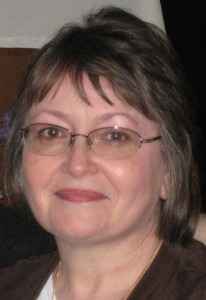
SistersSuzie Husami,
San Diego, CA.

My mother and father met in college in upstate New York – he, a Lebanese -Muslim-Republican named Muhammad and she, an American non-practicing Methodist-Democrat named Maureen. They fell in love and had three daughters – Najla, our olive-skinned sister, and my twin sister and me – pale and freckled. My mother chose a Lebanese name for her first child. Our father wanted American-sounding names for his second (and surprise third) so Maggie and Suzie were chosen. I’ve always loved my name – and loved the family I was raised in. Mine was a family that celebrated American and secularized-Christian holidays mixed with Lebanese ‘Hafli’s’ (parties) complete with belly dancers and tables heaped with Lebanese food.

I grew up thinking Lebni (a thick yogurt similar to Greek-style) was an American food – and only realized bagels were not middle eastern in elementary school when one of my Irish-American friends showed up with them at school. My father was a devout Muslim – and wanted his girls to learn more about the religion, but both of my parents felt the mosques in our area were too rigid – something my father didn’t want his girls to experience. He grew up in war-torn Beirut – where the constant fighting about ideals and spirituality lead him to adopt a more open-minded point-of-view: that differing perspectives were something to celebrate. It was this point of view that drew him to America – he fell in love with this country and the idea that all people are welcome.

I loved my father’s warm diplomacy, his quiet yet firm voice, the smell of his tobacco pipes – and the polite Arabic sayings that became part of our everyday communication. I always thought I might learn Arabic… beyond these polite sayings none of the Husami women spoke Arabic at all. It wasn’t until my father’s bloody nose was diagnosed as something more complicated that I began to realize that the middle eastern side of my family might be slipping away. My father dealt with a long battle with cancer – one that seemed to overtake my childhood. Eventually he succumbed in October of 1991. I grew up with a wonderful mix of two cultures but my sisters and I have always been and felt American – something I know my father had wanted for his children. The thing I yearn for now is to regain the Lebanese culture that infused my life when I was a child – and that began to slowly fade with my father’s passing.

A Cajun Girl in her Kilt

Michelle Blanchard Ardillo,
Rockville, MD.

A Cajun girl in her kilt, that’s me. My dad was born and raised in southeast Louisiana, as was I, but my mother was born to Scottish immigrants who came to the US for economic and religious freedom. Upon marrying my father, however, she abandoned her Scottish heritage and adopted my father’s culture, cuisine and customs. For example, although she grew up with oatmeal every morning, she never had it again after she married my father, switching to grits, the hot cereal of Louisiana. It wasn’t until one of my mother’s first cousins starting visiting us from Glasgow, Scotland, (after her retirement and the passing of her own mother) did I come to understand my Scottish heritage. My image of myself shifted. Was I just my father’s daughter? Was my mother’s past inside of me as well?
When I first visited Scotland in 2000, I felt like I had “come home”. The highlands and the lowlands; the heather, the thistles, and bluebells; the shortbread and the never-ending cuppa tea; the heavy accents; they all tugged and tugged at my heart. Now, I consider myself a series of contradictions: Community Coffee in the morning and black tea in the evening, gumbo for lunch and scones in the afternoon, Zydeco to energize me and Mozart to relax me. With my very French maiden name and my fair, freckled skin, I remain a Cajun girl in her kilt.

Si Senor! I am US citizen

wedding-2Heidy Avila Murillo,
Baltimore, MD.

My marriage is biracial, I am Hispanic and my husband is a Caucasian born in Maryland. This year after obtaining my US citizenship, my husband and I decided to have three days vacations in Canada. We visited Niagara Falls, Toronto city, and since I love Diego Rivera’s artwork, we decided to have an adventurous driving trip and passed by Detroit Museum of Art, which has original copies of Rivera’s murals.

When passing through the border checkpoint between Canadian area and Detroit, an officer asked for our passports, he reviewed mine very carefully. He started asking us what was our relationship? We said we are married, He replay for how long?, we answer 4 years. He asked back and directed the question toward my husband like if I didn’t understand English, and said Why she hasn’t change her name? My husband replied, “Well she doesn’t want it. “ After that he asked more questions; from where we are coming from? For how long we have been in Canada?, what was our purpose of coming to Detroit? For how long we are planning to stay in Detroit etc, etc. Still after answered all his questions, he didn’t seem satisfied. At the end he told us to park our cars and so we can pass by the office to be checked.

I got it officers in any checkpoint border need to check people’s passports, but this officer’s behavior wasn’t correct, why all that questions? What if we were just being friends, or complete strangers? What it is wrong if I don’t want to change my Latino name for a more Westernized? we were after all US citizens.

With this experience, the only conclusion that I can make is that his officer had his head “full of stereotypes” I guess it was hard for him to accept the idea that biracial marriages really exist, and that people like me “Hispanic looking” can also be citizens like him, but I don’t blame him, my passport was the only evidence that I had to prove it.

Always wondered why we moved so much.

Marcia Lee,
Savannah, GA

When we were growing up we moved a lot, never really met very many relatives on dad’s side. Our widowed granny, dads Mom lived with us and we had finally settled down in a town in south Mississippi. We were teenagers then and it was in the sixties, not a good time or place for anyone who wasn’t all white. Two of our cousins were living with us and they didn’t look at all like us. Our ancestors that we knew about were part CHoctaw and Scotch and French so we looked like a lot of other kids sort of Spanish
or French on dad’s side with straight dark hair and green or hazel eyes. Cousin Lynda had curly hair which I secretly loved and she hated. Many days I secretly ironed her hair. Granny was the cause of that as she would pat us both on the head and say of my straight hair good hair and of my cousins curls bad hair. Then she was always after us about not getting sunburned, even in summer she wore long sleeves and wide brimmed hats. Now we really just went along with it as the way Granny was. Then one day one of my brothers mentioned the cute girl he’d met and wanted to date, when Dad heard her last name he called all us kids to the dining room for a meeting. We knew it was serious cause Dad was a very quiet man.. The next thing he said was aimed at my brothers the truly scary words were you will never, ever think about that girl again, she’s not for you, then he turned to me and you don’t look at her brother. You all know her family are passing. About two years later we found out Granny’s secret, she was passing and so were we.

Brown girl rejected with red blood

Anonymous,
USA.

Grew up as the only little brown girl in class, always having to explain why my hair grew up to the skies when it rained and the humidity took control of my tresses, then drew tightly too my head. Never getting assistance from the PTA moms passing out red and black combs on picture day to make all the yellow-haired girls pretty for their cameo shots for school pictures. Always being left out, last picked, first ignored. Always looking for other under-dogs to befriend, going over to play with them, getting told by parents that lil’ Suzie isn’t allowed to play with n*****s. Me, going home confused because I wasn’t that bad word they said that I did not understand. It was the name my momma gave me and I was Suzie’s friend. I grew up to enter the field of science and eventually write book on embracing the beauty of hair that rises up to praise the Lord and a crown made uniquely to protect my brain and my body from the harsh subsaharan heat, hair that measures the barometric pressure of the wind and responds to shield me from the elements or expands to release energy when needed controlled by a medulla found in brain and tightly coiled hair – uniquely by God.

The Art and Racket of Passing

Raven
Cincinnati, OH

In parts of Eastern North Carolina the lines between black, bi-racial and Native American is blurry and sometimes nonexistent. I went to school with the great(x3) grandchildren of my family’s slaveholders. Our families share the same last name. Upon leaving I learned that my green eyes, light skin and curly hair were novelty to the rest of America. My southern accent is tissue paper thin, and I never really grasped African American Vernacular English (AAVE). People treated me differently; better. White men opened doors, white women spoke to me as if I deserved the tiniest morsel of their respect. Black men wanted my attention and black women reeked of envy. I could effectively be whatever/whoever I wanted outside of Halifax County; thus began The Art and Racket of Multi-Faceted Passing. Talk about culture shock.

“Good Morning!” But there’s no response.

Clyde Jasper
Oakland, CA

I’m a tall black man with dreadlocks. I’m a husband and a father. I’m a property owner, and a taxpayer. I’m a veteran. I vote. I graduated Phi Beta Kappa from a world class university in Berkeley, CA. In passing, I many times acknowledge a white persons presence and humanity with a “Good Morning” and they look at me but don’t respond.

“You’re white-passing, you aren’t discriminated against!”

Sanaz Chloe Homayounieh,
Irvine, CA

It’s a common joke among Iranians: “They used to classify us as Caucasian, but once 9/11 happened, now we aren’t white!”

Traveling has always been an interesting experience for my family. Growing up, being stopped at airport security was not unusual. Whether they checked our hair, ankles, or even our bare wrists, there was always something that caused airport security to pat us down. So much for “random security checks”, right? Some trips result in quicker checks, while others lead to quite uncomfortable situations. Even now, my mother and I in particular are stopped every time we pass security. Every 9/11, I await the never-ending jokes about how Islam is the motivation behind the attack. How my people are terrorists. How every Middle Eastern was directly involved in the attack. Even years after 9/11, the comments do not stop. It also did not help that my younger brother was born on the same day, his teachers end up thinking he is trying to cause a disturbance in class when announcing his birthday. A few years ago, my family and I went to take passport photos at Costco so we could visit Iran. It was the first instance where I had to wear a hijab in public since Iranian documents required us to wear one for any legal photos. I had never been stared at so much in my entire life. My family was met with weird looks, some even glaring at us. The walk to the photo center felt like it lasted an eternity. As a child, I never expected I would experience racism in any way, shape, or form. This was America, after all: my family traveled here to start a new life. Unfortunately, racist remarks towards my people are tossed around like their words have no meaning. I will not deny the privilege that my lighter skin holds. However, I will not deny the fact that my family has been direct targets of racism and prejudiced intentions.

Forcing diversity is what causes neo-segregation.

Ted Willis, Jr.
Cary, NC

As a teacher, I have seen how, with each passing generation, race is becoming less of an issue with my students. Most of the racial tension is bred from their parents and the time frame most of then grew up in (however, the parents are become the generation in which race was not an issue). The schools systems seem to still have a mindset that race is a problem *everywhere*. I disagree. Yes, I know that there are areas of the country where racial tension exists, but the younger generations are innocent of that. It’s being fed to them by the school systems.

When I was in college, I got in a verbal confrontation with my education professor, who claimed that “The school board of an LEA should reflect the racial demographics of whom it serves.” I replied, “So, you are saying that, just to maintain an equal reflection, you are willing to sacrifice people who deserve and are knowledgeable enough to make the right decisions for our students.” She couldn’t answer. It was this moment that I realized that the school systems are forcing diversity in places they shouldn’t. What they deem as being “fair” is causing even more tension.

Let our students decide for themselves who they want to sit with at lunch, who they talk to between classes, who they hang around. Have faith that they will make the right choices for themselves. I guarantee that if we let diversity happen on its own, the stipulation of “race” will decrease.

Too brown for the fancy restaurant.

Jane Medina
Orange, CA

My daughter Annie had just turned 21. So she, my husband, my son, and I put on our cocktail party clothes and went to the fanciest restaurant in Orange, California to buy Annie her first drink. As our car climbed the steep hill where the restaurant sat like a crown above the city, we worried that we wouldn’t be able to get a table next to one of the outdoor fire pits. We were right. All the fire pits were taken by white and Asian couples, so we sat at a little table next to the kitchen, determined to enjoy ourselves. Our determination slowly waned as we waited to be served. All of the parties near us were being served their fancy drinks, talking and laughing with the cocktail waitresses, paying their tabs, and leaving. We asked a passing busboy to speak to a waitress. His eyes darted towards the woman who evidently was supposed to serve us, he mumbled an excuse and hurried away. After an hour, we left, too angry to speak to the manager. We went to a Mexican restaurant at the bottom of the hill and had a wonderful time.

As a white woman married to a Mexican American man, I was used to the uncomfortable glances from people who disapproved of racially mixed couples. But I had seen those glimpses of prejudice decline during our 30 years of marriage. So I was genuinely shocked when we experienced such passive-aggressive bigotry in 2004. I think our society has matured nine years since then, but it is naive to say that prejudice has been eliminated. Perhaps someday all people will consider these subtle acts of prejudice as antiquated and as horrific as slavery. I hope so.

Kids’ mother tongue isn’t their mother’s

Elise DuBord,
Cedar Falls, IA.

Growing up in the Midwest, I started studying Spanish as a second language in high school, fascinated with learning about other cultures and enchanted with the idea of traveling to or even living in a new country. As a middle-class white kid, I was completely unaware of the privilege I brought to learning Spanish. I was not studying Spanish because I had to; I was doing it because I wanted to. It was interesting and exotic, and there was no penalty to me if I didn’t do it well or spoke Spanish with an accent.

After living abroad for a few years in college, I was able to call myself a Spanish speaker, and as a young adult, I wore that label proudly and somewhat cockily, showing off my Spanish abilities any chance I got. One day at work, I greeted a Latina client who was about my age in Spanish. She sneered at me and forcefully (and fluently) said, “I speak English.” I was mortified. Had I offended her? Was it wrong for me to greet her in Spanish? Did I have a right to make a claim on being a Spanish speaker?

In retrospect, I realized that there are no easy answers to these questions and I had much learning to do. Becoming a fluent Spanish speaker did not give me an open invitation to speak Spanish with anyone, anywhere. With many missteps along the way, I have become more sensitive to the language needs and desires of the people I encounter. I have learned to acknowledge and accept that sometimes I am not invited to speak Spanish, and it is not my place to control that conversation.

Fast-forward to a decade later to when my kids were babies and my husband (a native Spanish speaker) and I had decided to maintain Spanish as the language of our family. I knew that I would speak to my kids in Spanish from the start; we wanted them to be able to communicate with their extended family in Puerto Rico and grow up bilingually. In all of the first exciting moments of becoming a parent and meeting your kid for the first time—a new human being who you love and talk to—I was doing it in Spanish. A mother passing on someone else’s mother tongue.

At first, it felt awkward; I realized that I didn’t know how to talk to babies in Spanish. I felt self-conscious on the playground talking to my baby girl in Spanish while pushing her on the swing. Were other people listening? Did they think I was a fake? Most of the time I have felt lucky to be part of helping my kids grow up bilingually. Other times it has felt like a lot of work.

Now my kids are in grade school and are bilingual, even as ever-powerful English persistently erodes away at the edges of their Spanish. As far as I know, they haven’t experienced discrimination for speaking Spanish. But I also recognized that they are speaking Spanish from a place of privilege too. Their fair skin, middle-class upbringing, U.S. citizenship, and perfect English has so far allowed them to speak Spanish without many consequences.

I have many hopes for my kids. I hope they don’t face discrimination because they are Latinas and Spanish speakers. I hope that they are curious, empathetic, and kind. I hope that they proudly maintain their Spanish.

I know that I’m white passing.

Anonymous,
Burleson, TX

My mom is white and my father is Hispanic, so I am mixed. I am told that I’m White-passing a lot and it irks me for some reason. I know that I live in a society where White people have privilege, so I should be glad that I am Wiite-passing. However, when someone says that, I feel like a part of my identity is diminished and taken away. When I take offense for being called White-passing, people get confused. This problem is so insignificant compared to those that others face, so I feel obligated to ignore it.

So many racists look like me

Robert Goffeney,
Pittsburgh, PA

At first, I thought it would be difficult to come up with six words to encapsulate my experience of race as a middle-aged, middle class suburban white man. Immediately after that thought, my six words bubbled up out of – somewhere. People will never cross the street to avoid passing me on the sidewalk, but mine is the face of nearly every racist, homophobic, xenophobic Nazi you see on cable news and on Twitter.

Never Been Asked: “What Are You?”

Ella Harris,
Columbia, MD

I always felt disconnected from my African American identity. With my blonde hair, light green eyes, and fair skin, the world that I live in is fundamentally different. I am never asked where I am from, or if I am mixed. I am never asked the notorious, “What are you?” And rather than facing the discrimination that most African Americans face, my dilemma is that I must prove my blackness, and thus my biracial identity, in a society that views me as white.

For a long time I equated my own adversity to the discrimination that most African Americans face, but in reality, I possess a unique power: If I so choose, I can live my life as white without contradiction. This was a privilege I refused to acknowledge for years until I watched the death of George Floyd.

A few days later, dehydrated and aching from holding a sign for hours at my first protest, I somehow felt energized — I wanted to do more. I could no longer wait for someone else to present me with an opportunity to take action. I had to forge my own path to advocacy. I ultimately created an entire website, https://blacklives2020.weebly.com, to present what I had found.

Creating and sharing this website has empowered me to develop my voice and stand firm in my beliefs. I have the privilege of being white-passing and the responsibility to tell the narrative of my African American ancestors.

Becoming an activist has also forced me to be vulnerable with people I have known all my life and people I have never met. I revealed my insecurities about my conscious and unconscious privileges as white-passing. I came to terms with my outsider status in both the white and African American communities, while also accepting that even though my narrative is different, it is still valid.

George Floyd’s murder fundamentally changed how I perceive myself and my role in society. I am black, living under the guise of a white person — a juxtaposition I hated for so long — but now I see the power I possess. It is this power that drives me to continue my journey.

White but not proud of privilege

Harley Guyton,
Waleska, GA

Being a white passing Arab has its benefits. To others, I am seen as privileged. That is something I am not proud of though. Not only is there a disconnection with my culture due to the color of my skin, but there’s also a disconnection to society. White privilege is something a lot of people try to deny. Are they scared? Do they want to be oppressed? Is it guilt? As much as we want to view everyone as equal, there are many people, specifically of power, that don’t treat everyone as if they are equal. This can be seen in policing, media, and even in pay. White privilege is a thing, and although we can’t get rid of it, we can use it to help out those who can’t speak out for their selves.

Join the Newsletter

Subscription to our newsletter open soon.

Indulge in timeless elegance with our hand-curated collection of luxury vintage men’s fashion. From classic suits to iconic accessories, our online store offers a premium shopping experience for the modern gentleman who appreciates quality and style. Shop now and elevate your wardrobe with our carefully selected pieces that celebrate the art of craftsmanship and heritage fashion.