X

Once had dreadlocks. Now know better.

Susan Tsoglin
Seattle, WA

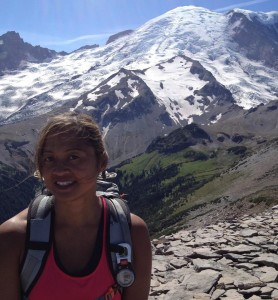
At the time, I was a white female college student in a mainly white university. Following the disaster that was the reaction to NineEleven, I became more political. I became involved in protests and rallies, doing educational flash mobs, being “alternative.” I was surrounded by white hippie culture, which had re-appropriated dreadlocks from other ethnic groups cause it looked cool. So, to follow suit, I had my hair locked (which wasn’t easy, let me tell ya). It was only after I took a class on whiteness, privilege, and isms, that I understood why dreadlocks did not belong on my white head.

Read More
The History of Dreadlocks

Queer and Pakistani. Not a contradiction

Aleenah Ansari,
Seattle, WA

I didn’t choose to be queer, but I can choose to live authentically, to stoke conversations about queerness in communities of color, approaching the dialogue with empathy, without judgment, and with respect for people, beliefs and experiences that differ from my own.

I haven’t always known how to talk about my identity, and maybe you don’t know how to have this conversation with folks from the LGBTQ+ community, either. Here’s my ask: Continue to learn and challenge your assumptions. I’ll be doing the same, while proudly celebrating all the different aspects of my identity.

Best Audio Book Selection The Seattle Times

The intimacy and authenticity of these responses, anonymous and otherwise, translate well to audio through the aid of a seemingly countless array of narrators. The result achieves the seemingly impossible: a national Town Hall expertly moderated by Norris herself, on a topic nobody wants to talk about, in which everyone hears and is heard. An unforgettable and vital listening experience deserving of the widest possible audience.

Asian: Discounted everywhere but HR reports

My experience
Seattle, WA

People say “reassuring” discounting things like “I never think of Asians as people of color, you’re like white people with funny eyes.” and operate using stereotypical assumptions believing they are operating “color-blind”. In most workplaces recognition of racial diversity is limited to certain days of celebration and when it makes HR reports look good.

Once uneducated/naive. I’m changing that.

Jordyn Ducotey,
Seattle, WA.

Recent events have really made me challenge my own thoughts and the perceptions that I have been taught. I consciously make an effort to expose myself to the injustices that are occuring in the world around me. I actively seek stories and look into them instead of listening to what my peers/the media feeds to me. I used to be the person to say, “Stop making everything about race.” and the other common phrases you hear these days. But after challenging myself and diving into the issues on my own, I’m so glad that I’ve learned that there are REAL issues going on. I now spend time trying to educate others, while continuing to educate myself. I think that education is the most important part. People will not change their views on this unless they are educated about it.

Deliberately deviant to preserve white privilege

M_nMarcos Cu,
Seattle, WA.

I would prefer to write about diversity instead of someone else’s prejudices. For example the Mayan’s mathematical wonders architectures. The Kwakwa ka’wakw Pacific Northwest Coast people, totem poles monumental sculptures, the Chimamanda Ngozi Adichie’s literature thus we talk about what matters not what put us down.

“But you’re not like other Mexicans.”

167653_1818748392191_185574_nTom Vásquez,
Seattle, WA.
I was in high school when this happened.

I’m a son of a Mexican-American, so I’m 50% Mexican blood. 50% French-Canadian and English. When I was in high school, I was struggling to understand what it meant to be Mexican-American. The other Mexican kids in my school … well, the ones I was most aware of … were not the best influences. They drove low riders, they didn’t care about school, they clowned and acted like idiots. One guy in particular stuck in my mind. I thought to myself, “I don’t want to be like him. He’s like the worst stereotype of a Mexican, and I don’t want to be like him.”

I don’t even remember the conversation, but I remember who I was talking to. I won’t share his name, but he was a red-faced, blonde-haired kid. Good athlete, did well in school, seemed to be doing okay socially. And we were just talking about the kids in school, I guess, and then he said that.

Matter of fact, what I think he actually said was, “But I get along with you. You’re not like other Mexicans.”

What did that mean? That I didn’t have an accent? That I didn’t wear baggy pants and slicked-back hair? That I worked hard in school? (I’m going to note here that several Mexican-American students in my school were doing well, including several in my own class. But I fixated on the slackers, the bad examples. Those guys were the Mexicans to be wary of. They were the examples of who not to be.)

At the time, I took it as a compliment. It was working! People didn’t think of me as one of “those people.” I wanted to be distinguished for myself – just Tom, not “that Mexican kid Tom.” I saw it as a choice.

Now, almost thirty years later, I still play that conversation over in my head. What should I have said? Should I have told him that all Mexicans don’t act alike? At age 15, I was still learning that lesson myself.

Always, what are you? Long story.

20090430_002_smMariko Lockhart,
Seattle, WA.
Collected from The Race Card Project, On Location: Seattle Community Colleges

My dad was black, born in Panama, as my grandfather from Monserrat went there to work on the Canal. My grandmother was from Jamaica. They moved to Chicago where my dad grew up on the South Side. My mom’s parents were Issei, first generation Japanese and she was born and lived in California until being sent to the concentration (aka relocation) camps for the Japanese during WWII. Biracial children were pretty unusual back in the 60’s. I constantly had people ask me, What are you? Or where are you from? I knew what they were asking but might answer, New York, just to see their reaction.

No one else chooses my identity.

998476_10104768756720124_1994979522_nNatalie,
Seattle, WA.

My grandmother never got to pass for white. She was sent to indian boarding school. 50 years later, I grew up in white suburbia, where no one assumed I was Native or even mixed-race. I self-identify as Native, I speak Chahta, I participate as a tribal citizen, I carry on the family stories, and today I’m a physician and activist fighting against poverty, homelessness, addictions, and diabetes. Ancestry: African-American, Choctaw, Chickasaw, Irish, German, Luxembourgish, Welsh.

Do you make your own tortillas?

Norma Torres Addis,
Seattle, WA.

The first time I heard this question, I thought it was funny. After hearing it a few times, it made me wonder. If my heritage is Mexican and I don’t know the first thing about making tortillas does that make me less of a Latina? So many times organizations I work with have tried to start the conversations about racism and social justice over ethnic potlucks. While I agree that sharing a meal brings people together, aren’t we more than just the food we eat?

Learn more about Norma Torres Addis’ six words on NPR’s Morning Edition

I will never really ‘get it’.

Me_and_Coreen (1)Celia Beasley,
Seattle, WA.

Being an upper-middle class white woman, I know I will never truly understand what it feels like to be a person of color in America. Despite my attempts to be aware of racism in this county through conversations, news stories, interviews, books, this website, etc, I know that I will never ‘get ‘ what it feels like to experience racism every single day of my life. Until I have been followed around in stores, pulled over by the cops for no reason, seen people clutching their belongings when I walk by, had people comment on how smart I sound for who I am, or fear for my son’s very life because of his skin color – I will never truly understand the cost of being a person of color in America. And by ‘cost’ I mean what it takes away from us – both as individuals and as a society.

I grew up in Oakland, California, in the only white family in an all-Black neighborhood. I lived in Madagascar for 2 years. But even those experiences of being a minority were nothing compared to the stress from racism that a person of color experiences every single day in America.

I know I am only responsible for my own actions, and for a short time, those of my young children. I can’t justify, explain or take responsibility for what other people say or how they act. I don’t know if there is anything I can do to change racism in America. I am fully aware of my White privilege, not only because of race but also because of class, and that I am very, very lucky. And I make sure my kids know that, too.

The picture above is of me, age 7, with my beloved neighbor growing up.

Join the Newsletter

Subscription to our newsletter open soon.

Indulge in timeless elegance with our hand-curated collection of luxury vintage men’s fashion. From classic suits to iconic accessories, our online store offers a premium shopping experience for the modern gentleman who appreciates quality and style. Shop now and elevate your wardrobe with our carefully selected pieces that celebrate the art of craftsmanship and heritage fashion.